

Every Major Change in Bleach: Thousand Year Blood War Cour 1
Bleach: Thousand Year Blood War was Bleach’s iconic return to form after a decade, both adapting the manga far more faithfully than the original anime and adding more crucial lore aimed at improving the whole arc and ending of the manga.
The Bleach anime returned after a 10-year hiatus on October 11, 2022.
First announced on March 21, 2020 during “Bleach 20th Anniversary Project & Tite Kubo New Project Presentation” livestream and later on November 8, 2020, with a trailer a year later during Jump Festa 2022 on December 18, 2021.
Although this will go into Cour 1’s specific changes, some elements would define the direction of the series moving forward.
Production Changes
Although under the same studio as ten years before its release, Bleach: Thousand Year Blood War would be under the direction of Tomohisa Taguchi, the director of Akudama Drive, Pierrot’s popular original anime that aired in 2020.
There were multiple stylistic changes that came with the new direction.
Title Cards
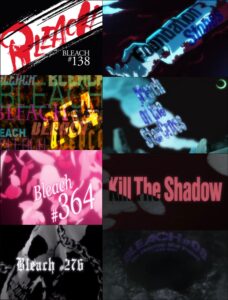
First, the anime would follow the direction of Tite Kubo’s manga more faithfully through the use of the manga chapter titles instead of anime-original ones.
As a consequence of that, many of the title cards were embedded into events of the episode following the style of the manga.
However, this would fade away more and more as the cours went on, resorting to some episodes using a black background with colored lettering, albeit with some creative garnish for episodes such as “The Blade IS Me” in the case of Cour 1.
Although the approach is more faithful to the manga, this adaptation would forego the use of episode-specific title cards that only consisted of an episode visual theme and the episode number (Bleach 1 or Bleach 366)
Eyecatches
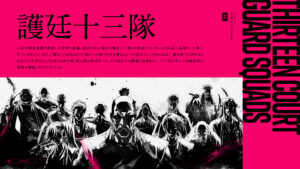
Eyecatches became more diverse, explaining the relevant characters, abilities, locations, and concepts in more depth than was already given in the episode.
A noteworthy example would be in Cour 3 where the Valley of Screams explanation confirmed that the actual events of “Memories of Nobody” are canon as it specified the “Shinenju”, a being that was never referenced in the manga or light novel, “Can’t Fear Your Own World”.
Cour 4 also explains the revised canon regarding Yhwach no longer needing to sleep to regain power by the time he absorbed his father’s power.
Episode Poems
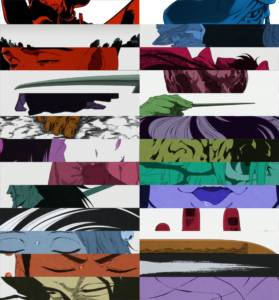
The episode previews were replaced with the poems found in every manga volume.
The ones used in Cour 1 were derived from the poems in the Thousand Year Blood War
However, there would be some original poems to fill in the blanks.
To name a few, the first anime-original poem was from Chojiro Sasakibe, Head Captain Genryusai Yamamoto’s devoted lieutenant of Squad 1
“The vow rests in the shade of the willow, even as the lightning fades.”
Presentation Changes
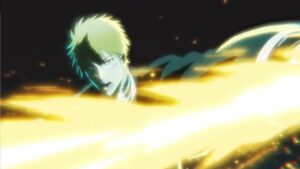
Within the episodes, some may notice major differences in presentation.
The most striking would be the removal of the original Reiatsu effect that involved vibrations and screen shaking.
Instead, this would be replaced by colored bursts of energy and aura.
However, this is not something necessarily tied to Taguchi as after the Arrancar Saga, the Reiatsu effect fell into disuse.
This would seem some momentary returns: such as in Cour 3 will Aizen and Kyouraku’s Reiatsu effects and in Cour 4, Yhwach consistently using the Reiatsu effect.
Another important element to Taguchi’s direction is the emphasis on color grading varied scenes.
The World of the Living retained the same realistic colors but various episodes would be dominated by color themes.
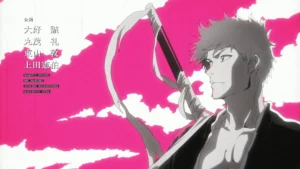
Cour 1 is the most faithful to Taguchi’s vision of specific color themes, with the most notable example that seems more aligned to Kubo’s intentions with black and white being the usage of pink.
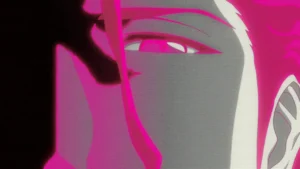
Pink or strawberry color is the predominant color template for the eyecatches, the opening, “Scar” by Tatsuya Kitani, the flashbacks to the old anime style, and the final episode of the cour.
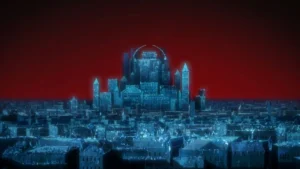
Cour 2 and Cour 3 would be defined by this approach as the infusion of the Seiretei and Wandenreich resulted in the Soul Shield Membrane turning red in contrast to the icy buildings of the Wandenreich city.
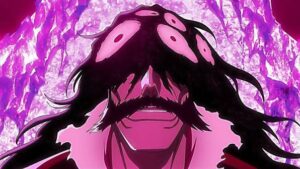
In Cour 3, Wahrwelt would take on a pinkish-purple hue throughout its environment, with the interior of the castle itself being bright pink.
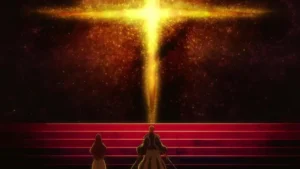
In Cour 4, red becomes the dominant color for Yhwach’s throne room while, after the Black Auswahlen in Episode 47: “The End 2”, the Seireitei has normal colors.
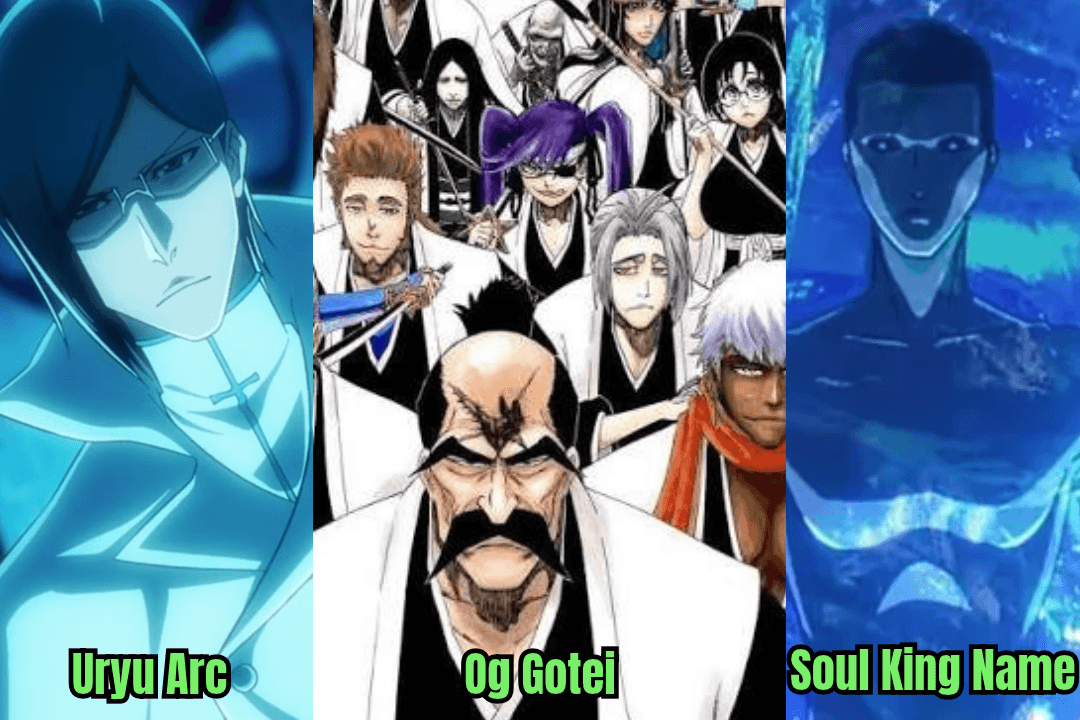
How Uryu Ishida Chose Yhwach
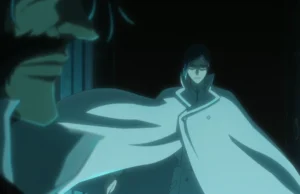
Episodes: Episode 3: “March of the StarCross”, Episode 6: “The Fire”, Episode 11: “Everything but the Rain”, Episode 12: “EVERYTHING BUT THE RAIN “June Truth”
This change is one of the most important and inspired directorial decisions of the Thousand Year Blood War anime as Uryu Ishida becomes a more thoroughly fleshed out character in the anime as opposed to the manga suddenly making him a part of the evil Wandenreich faction after his appearance, where he rejects Ichigo’s offer to join in saving Hueco Mundo, stating his position as a Quincy prevents him from helping his existential enemies, the Hollows in Episode 2: “Foundation Stones”.
First, in Episode 3, having suspected the involvement of Quincies in the recent string of attacks, Uryu checks the Ishida Family archives for any information on the Wandenreich, only to find nothing and with Ryuken telling him that what he is looking for is not here.
Later in the episode, we see Uryu sneak into Ryuken’s office to find Soken’s diary, which reveals the truth of the Wandenreich and the death of his mother.
This leads into an argument with his still-estranged father, who catches Uryu in the act, for not telling him about the truth and so he runs off.
Uryū Ishida continuing to read Sōken Ishida’s journal under the bridge and coming across a section on the Quincy extermination which occurred 1,000 years ago, where he finds a depiction of Yamamoto using his Bankai.
Uryū finishing the section of Sōken’s journal on the two Quincy exterminations and recalling his own alliance and friendship with Ichigo despite the latter being a Substitute Shinigami.
Jugram Haschwalth would eventually enter the Human World to pick up Uryu as he stayed in the rain, likely for days due to reading Soken’s diary.
Later in Episode 12, Ryūken later finds Sōken Ishida’s diary abandoned by Uryū underneath the bridge.
This would lead into the final episode of the cour, where Uryu reappears after a much expanded arc in the 13 episodes of this cour, with Uryu appearing in half the cour and a lot of runtime dedicated to making sense of Uryu’s betrayal.
The Soul King’s True Name
Episode: Episode 6: “The Fire”
Everything that takes place in Cour 1 as part of Uryu’s personal arc will have ripples in every other change in the cours to come.
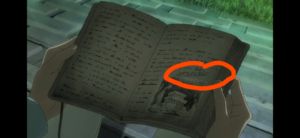
For example, the Quincy lore book Uryu reads has a small detail where the name “ADNYEUS” is written down.
This name would be mentioned exactly once per cour for a very good reason as it is the personal name of the Soul King, as revealed in Episode 28: “Kill the King”.
Yhwach vs Haribel
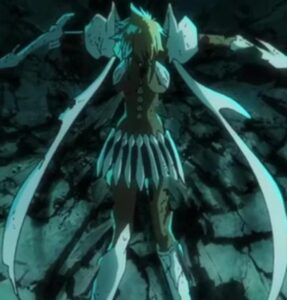
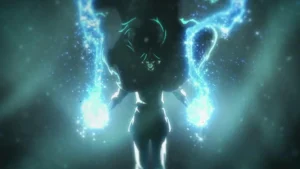
Episode: Episode 2: “Foundation Stones”
While the battle happened in the manga, it was off-screened, with only Harribel’s capture being shown, in the anime, we see an injured Harribel protect Nel and her Fraccion from Yhwach’s arrival.
Yhwach appears, floating in a whirlwind while manipulating the Blue Flames and it cuts off the point where Harribel is soundly defeated.
Sasakibe’s Bankai in Action
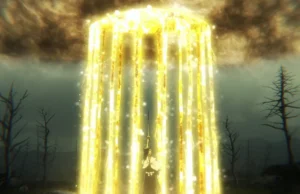
Episode: Episode 5: “Wrath as a Lightning”
Although we see Sasakibe’s Bankai in action via Driscoll in the manga, summoning pillars of purple lightning, in the anime, we see an actual demonstration of the moment he gave Yamamoto the scar from which the Genryusai part of his name was derived from.
We see a new technique, Lightning Infusion, where Sasakibe moves the blade along the pillars of lightning summoned by the Bankai, infusing it for a powerful charge strong enough to puncture the skin of a younger, prime Yamamoto.
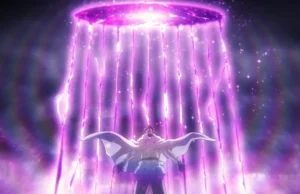
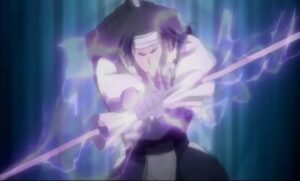
Sasakibe’s Gonryomaru was depicted in the Zanpakuto Rebellion Arc as using purple lightning, the same color as Driscoll’s version.
However, in the anime, Sasakibe’s lightning is yellow.
Yhwach and Aizen’s Meeting

Episode: Episode 6: “The Fire”
In the manga, Yhwach just exposits to Yamamoto that he had a conversation with Sōsuke Aizen and that he rejected the offer to join his Special War Force (or identifying him as a Special War Threat), though that could change as they have all the time in the world, a hint towards Aizen using Kyoka Suigetsu to hypnotize him and stall him.
In the anime, we see the entire conversation play out, but with some unusual, almost anachronistic changes.
Mainly that Aizen’s mouth and left eye seals have been removed.
This is visually explained with Yhwach unlocking those seals so that Aizen would speak with his mouth.
It is implied from Kyouraku’s later statement when attempting to free Aizen in Cour 3 that the manga had the two main antagonists conversing through Spiritual Pressure instead of verbally.
So in the anime, given that Yhwach would not have the time for bureaucratic processes in Central 46 or the means to steal the keys that would later come to Kyouraku’s possession, he likely used Spiritual Pressure to unlock select seals, either being capable of fully freeing him or only up to a certain point.
As to the content of their meeting, we see Aizen identify Yhwach by name, as well as the Wandenreich.
After calling him a Special War Threat, Yhwach says that they share a common goal in destroying the Soul Society, to which Aizen rejects, saying that he serves under no cause and that it would be best if the Quincy Emperor does not follow the footsteps of a Soul Reaper.
Yhwach noted the futility of pushing further, saying that it would be too time-consuming to kill or subdue Aizen due to the Hōgyoku merged with him.
The change does serve as a visualization of what happened and why the meeting took so long that Yhwach needed to retreat midway into playing with Ichigo in the next episode.
The Original Gotei 13
Episode: Episode 7: “Born in the Dark”
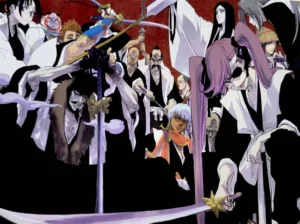
Outside of the Uryu arc that spans the entire anime adaptation, the most drastic and headturning change to the adaptation is in the creation of 11 new characters, the original Gotei 13, who were nameless in the manga.
Here, we have full names and brief profiles, alongside designs made by Kubo himself.
- Chika Shihōin – Squad 2 Captain (ancestor from the Shihōin Great Noble House)
- Kinroku Izuhara – Squad 3 Captain
- Chigiri Shijima – Squad 4 Captain
- Danjirō Obana – Squad 5 Captain
- Furōfushi Saitō – Squad 6 Captain
- Nobutsuna Shigyō – Squad 7 Captain
- Batsu’unsai Katori – Squad 8 Captain
- Entetsu Kumoi – Squad 9 Captain
- Furuoki Ōtogawa – Squad 10 Captain
- Uhin Zenjōji – 12th Division Captain
- Saizō Sakahone – 13th Division Captain
Chika Shihōin is the most notable addition here as it validates some classic lore from Bleach, that the Onmitsukidō are one of the three armed forces of the Soul Society alongside the Kido Corps and Gotei 13, itself part of the Gotei 13 as Squad 2, and that it has been headed by a Shihōin ever since.
Since Yhwach identified the original Gotei 13 captains as some of the most violent murderers and criminals around, this may not necessarily mean a Noble’s military
This also further solidifies Tite Kubo’s Klub Outside Answer No. 706, of why creating the Gotei 13 did not qualify him for the Royal Guard or Squad Zero, that there were already pre-existing armed forces, such as the Shihoin Onmitsukidō, and thus the Gotei was not an innovation but a better version of such a concept.
Ginrei Kuchiki was Captain of Squad 6 during the Turn Back the Pendulum Arc and given his age and friendship with Genryusai Yamamoto, it is likely he was Saito’s successor and thus cemented the Kuchiki Family’s hold on one Gotei 13 Squad, although Shunsui Kyouraku did not name him as one of the four Captains who held their titles for over 100 years.
Although given that Kyouraku forgot about Unohana, this could be why in spite of Ginrei’s obvious aged appearance compared to majority of the Captains looking as young as Kyouraku himself
Perhaps Ginrei’s position brought some balance to the Shihōin influence.
Meanwhile, Isshin Shiba’s position as Squad 10 Captain, which came after the events of the Turn Back the Pendulum Arc.
Why Chojiro Sasakibe Was Killed First
Episode: Episode 7: “Born in the Dark”
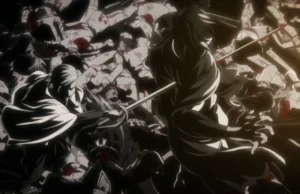
In the flashback showing the original Gotei 13, we see Sasakibe hiding among the bodies of dead Soul Reapers and Quincy to stab Yhwach from behind.
To note, many spiritual beings are capable of hiding their Spiritual Pressure, so even without the Almighty and just his already impressive sensing capabilities, Yhwach would have been distracted by Yamamoto’s overwhelming presence via Bankai and, as Kyouraku would later tell Lille Barro in Cour 3, tunnel vision from using his Reikaku senses, to realize Sasakibe’s deceptive ambush.
We can see why Sasakibe was the first to be killed and serve as the physical Declaration of War from the Wandenreich.
While Byakuya’s eulogy of Sasakibe was removed from the anime for pacing reasons and to give Yamamoto the peace to reflect on the bond with his oldest pupil, his one major contribution to the story that appeared 20 years after his initial, humiliating introduction against Ichigo has cemented his legacy in the fanbase, as the man who dealt the backstab that sealed Yhwach’s first defeat.
Uncle Isshin Revealed Early On
Episode: Episode 7: “Born in the Dark”
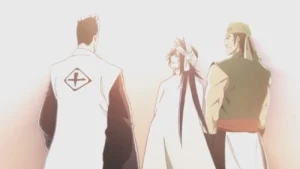
This is more of a minor visual change but the anime already revealed Isshin’s familial identity through a single shot that was not in the manga, therefore giving every viewer a clear hint of what Isshin would later reveal by Episode 11: “Everything but the Rain”, his identity as a Shiba.
Unohana’s Bankai Expanded
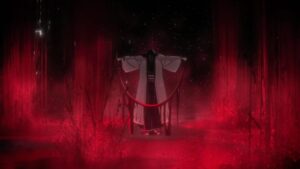
Episode: Episode 10: “The Battle”
While both manga and anime lack exposition that directly connects to Unohana’s Bankai power, the anime’s visuals make it clear what the Bankai does.
It creates a domain of blood, where Unohana’s sword slashes can become long ranged slashes that deal lethal damage and, at Unohana’s discretion, heal the wounds of her target, thereby making them an immortal dummy.
This Bankai forces Kenpachi Zaraki to evade or deflect them until he grows strong enough to outmaneuver Unohana altogether.
This manifests her two identities: the Captain of Squad 4 and Yachiru, the name she gave herself (Klub Outside No. 598), which means Eight Thousand Flows or slashes or sword styles.
Named Characters
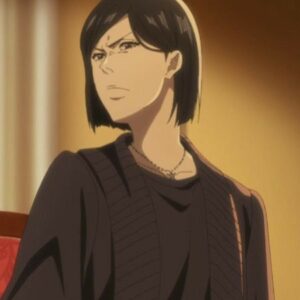
The Thousand Year Blood War gives new canon names for characters who were previously unnamed.
For Bleach: Thousand Year Blood War, it is the name of Ryuken’s mother, Soken’s wife and Uryu’s paternal grandmother, Izumi Ishida.
None of her characterization has been expanded on in the anime, still retaining Soken’s distant relationship with his wife and son, as well as the implied Hollow scar on her left leg that made the Echt Quincy impure.
Modified Bankai Hint?
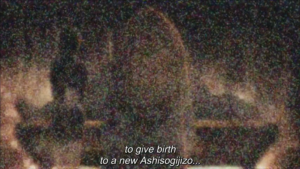
Episode: Episode 13: “The Blade is Me”
We see the same scene where Akon, upon learning that Mayuri was cooped up in his laboratory for 24 hours straight, sees Mayuri and Neko work on something and were horrified by what they saw.
In the manga, we only see one shot of an experiment table but nothing clear enough while in the anime, we hear something cry.
We learn in Cour 3 that this cry is from Konjiki Ashisogi Kizo: Matai Fukuin Shoutai, Mayuri’s modified Bankai.
Although the manga seems enough to present the idea, the movement within the anime and the larger object inside shows that Mayuri spent much of those 24 hours preparing for this Bankai modification, alongside his anti-Shadow experimentation.
This is a fitting place for the moment because the episode reveals the true bond between Zanpakuto and Soul Reaper while we get a hint of how Mayuri even acquired Bankai, by doing the opposite and objectifying both his own being and his Zanpakuto, the mirror of his soul.
CLICK HERE TO JOIN THE ANIME EXPLAINED WHATSAPP GROUP CHAT NOW!