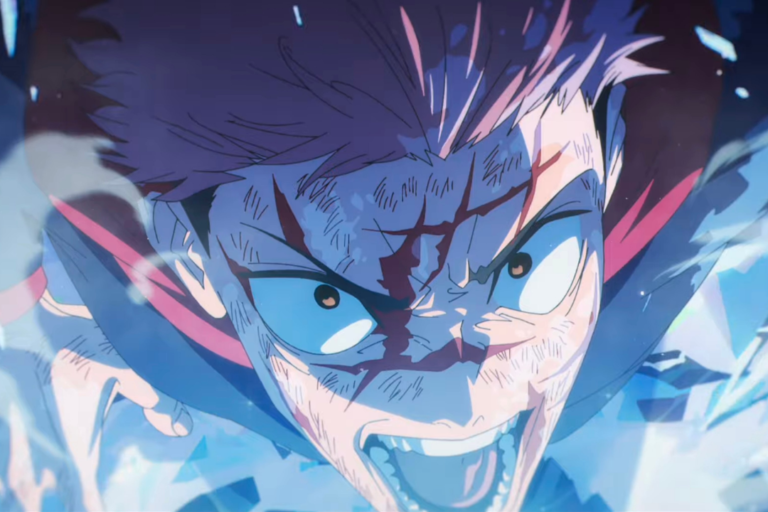
The Most Creative Jujutsu Kaisen Opening Yet! Jujutsu Kaisen Season 3 Opening 1 Breakdown!
Arguably Jujutsu Kaisen’s best opening, we have compiled all the juicy references and made a detailed analysis on Aizo’s incredibly dense correlation between Gege Akutami and Gosso’s storytelling and what it says about the real world.
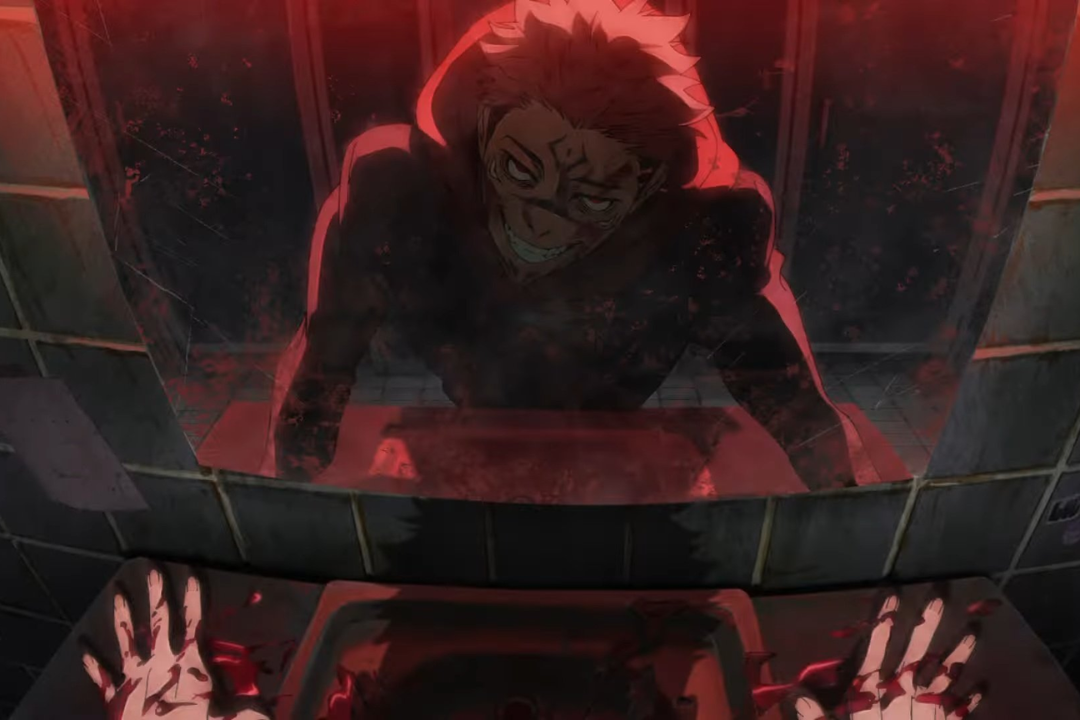
The Winter Season 2026 has already started and Jujutsu Kaisen Season 3 might have the opening of the year, AIZO by King GNU.
Jujutsu Kaisen In a Nutshell: An Opening Summary
Kenjaku’s Experiment
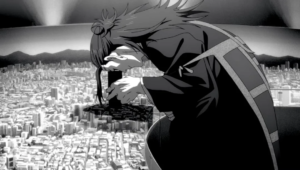
We see Yuji walk into Tokyo in red, with an eye in the center while the buildings seemingly drip into blood, representing how it has become the Inhuman Makyo or Demonic Realm.
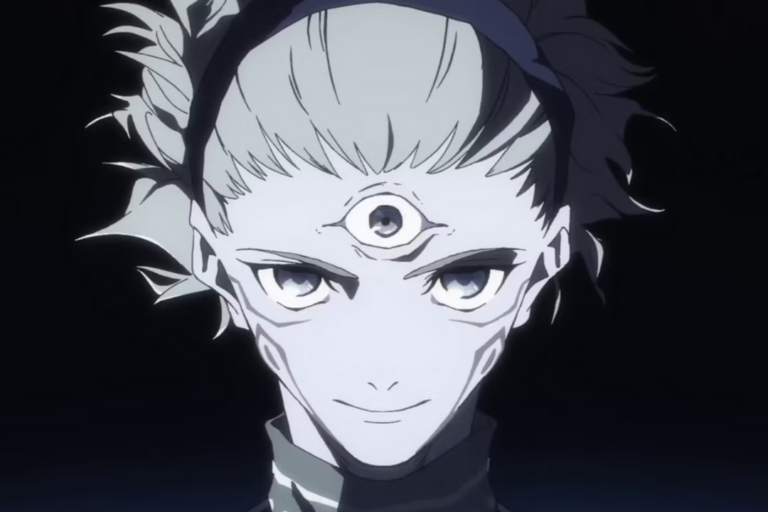
This eye belongs to Kenjaku and that is because of him “seeing” through the Colonies through the barrier hole in the sky, akin to a microscope and also representing his constant surveillance with his many TV screens.
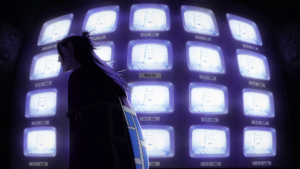
We see Kenjaku looking over a model of Tokyo while covering certain parts in black barriers, representing the Ten Colonies for the Culling Game, his eye pearing over them as if he sees everything, and judging by the many televisions in his hideout, he is indeed observing events for his amusement.
The Terror of Ryomen Sukuna: Opening Scatter Shots
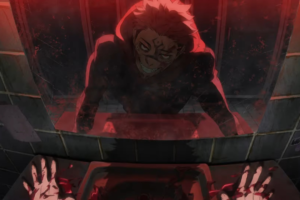
At the 30-second mark, after the lead characters do their poses: a few art references (from 1st to 3rd), then to shots of Yuji with his Death Painting brothers Eso and Kechizu, including the premature ones, Tsumiki in bed, Yaga looking down on Panda when he was born, the Zenin Clan household and Yuki looking over the skies, and this menacing shot of Sukuna inbetween.
While Sukuna only makes about 30 seconds of present-day screentime during the arc, he remains firm in Yuji’s mind, taking responsibility for his crimes, such that Yuji sees him in the reflection.
Character Lineups
There were two types of character lineups shown.
In the first one, we see all the characters flexing their moves in various transitions, including MEgumi’s Ten Shadows technique.
In the second, after the bomb drops, we have a uniform pattern, where characters are in their signature colors, posing within black backgrounds.
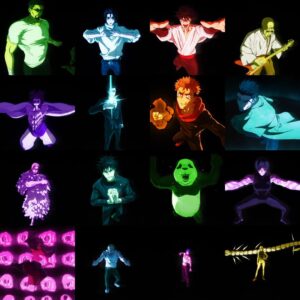
The characters in order from top to bottom, left to right: Masamichi Yaga, Yuta Okkotsu, Ranta Zenin, Yoshinobu Gakuganji, Choso, Hiromu Higuruma, Yuji Itadori, Atsuya Kusakabe, Reggie Star, Megumi Fushiguro, Panda, Maki Zenin, Jinichi Zenin, Kinji Hakari, Kirara Hoshi, Yuki Tsukumo and Ogi Zenin.
And at the end, Naoya Zenin standing, before he activates his Projection Sorcery and we cut to his fight with Maki in Episode 4.
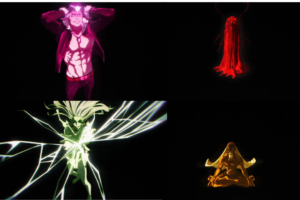
In Version 2 starting from Episode 11: “Tokyo No 1. Colony Part 5”, we see the Sendai Colony Sorcerers replace Ranta Zenin, Reggie Star, Jinichi Zenin and Ogi Zenin in this order: Ryu Ishigori, Takako Uro, Dhruv Lakdawalla, and Kurourushi.
Choso Ball
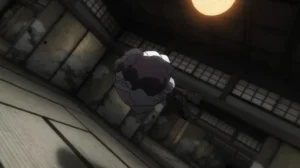
One of the funniest moments is from Choso spinning like a ball inside the Zenin room and it so happens that the lyrics say “spin and spin”, taken as a command.
This could be tied to Choso’s fight against Naoya, who controlled most of the flow in the fight thanks to Projection Sorcery, especially since he rolls within the Zenin room, where the men of the clan were all cramped together.
However, it could also be a reference to Choso being a Death Painting since he is in a fetal position.
Ten Shadows Symbols
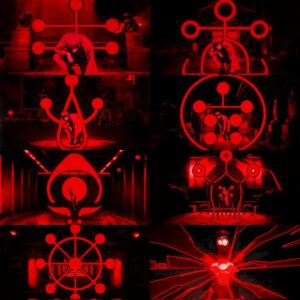 Like in Specialz, King GNU’s Season 2 opening for the Shibuya Incident, we have Jujutsu symbols, this time just Megumi’s Ten Shadows.
In order from left to right, up and down, we have:
- Jewel of Turning Back on the Road and the Jewel of Plenty (Combined): Divine Dogs: Totality
- Mirror of the Shore: Max Elephant
- Jewel of Life: Great Serpent (manga)
- Mirror of the Deep: Toad
- Jewel of Resuscitation: Great Serpent (anime), Nue (fused with Great Serpent), Round Deer
- Cloth of Various Things: Rabbit Escape
- Wheel of Dharma: Mahoraga
However, some fans have made the claim that MAPPA made an error regarding symbol 3 and 5 as they are both attributed to the Great Orochi and Sukuna’s Nue but it is noted that Nue in later corrections has a different symbol, which happens to be used by the manga version of Great Orochi.
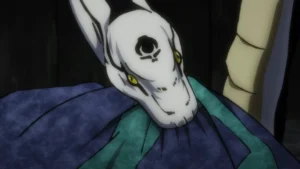
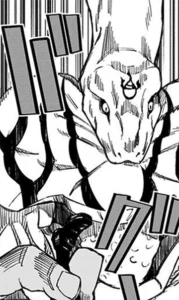
This is likely feedback from Gege Akutami to want Nue to be affiliated with the Jewel of Life rather than Orochi, which had the Jewel of Resuscitation.
Of note, the Jewel of Resuscitation also features on the left side of Round Deer’s neck, which makes more sense because the symbol represents healing and revival, which fits the Deer’s ability to output Positive Energy and use Reverse Cursed Technique.
On the other hand, this will become a problem if both anime versions of Great Serpent, Nue (which had Great Serpent fused because of the mark), and Round Deer share the same symbol.
A more likely answer would be that Round Deer will have the Jewel of Life instead and that Megumi might even summon Round Deer during the fight against Reggie Star in the anime.
Considering how much the anime has expanded and changed the fight between Yuta and Yuji in the first episode, that could be a possibility.
Additionally, only seven of the nine Shikigami symbols are present and this is because Piercing Ox has yet to be introduced to the anime and Tiger Funeral has never appeared in the series at all.
The other symbol of the Ten Sacred Treasures of Shinto, the Snake Repelling Scarf, is not used but could have been an appropriate symbol for Great Serpent, given that the Bull Reppeling Scarf symbol is with the Piercing Ox.
Every Art Reference
A common theme with these art references is reflective of Season 3’s critique of social injustice, both in the Jujutsu and the real world, from the Zenin Clan’s toxic traditionalism to Higuruma’s experience with a rigged, hostage justice system that is still a problem for Japan to this day.
1. The Gray Forest (Forêt grise) by Max Ernst (1927)
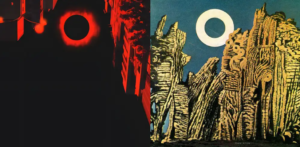
The very first shot is already a classic art reference and one from the Surrealism movement that expresses the unconscious mind.
Besides reminding anime fans of the classic manga imagery of Berserk’s Eclipse, the world turning red from an eye in the sky (the solar eclipse), the shot quite resembles Max Ernst’s oil canvas painting featuring fossil-like, textured tree trunks under a dark sky with a white sun or moon.
2. “Madame Monet and Child” by Claude Monet (1875)
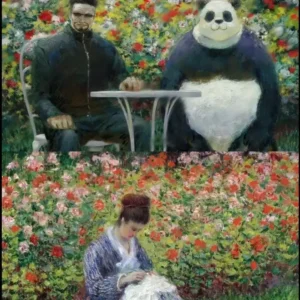
This was a painting done out of love for family, just as Yaga’s moments of life have been.
But there is more.
Claude Monet, like Principal Yaga, was a nonconformist and we see Gosso’s genius in choosing a painting that reflects Yaga’s silent rebellion, or rather, a subtle revolutionary moment.
By admiring the ordinary, Monet wanted to capture the temporality of a moment in art through Pure Impressionism, where, rather than creating something fixed and perfect like the more classical styles, he would capture movement, light and all sorts of fleeting effects.
This painting was done outdoors, something never done before, and he colored the dress of the muse, his wife Camille, with a mixture of multiple colors as part of his Impressionist color theory that was more tied to texture.
And this was not even a planned scene at all, as it was done to maintain the natural moment of the scenery.
Some parts are left unfinished, left raw and less detailed than needed, letting the cloth be reflected by the lighting than be that intended color.
This might also be reflective of the nature of Shota Goshozono’s approach to the Jujutsu Kaisen anime.
In contrast to the heavy detail of Season 1, Season 2 sacrifices detail for quicker and yet more realistic character designs and that lack of fixed detail in favor of a looser style makes it not only easier to animate but also more attuned to the environments, usually photorealistic scenes, that the characters are on.
Gosso focuses on movement, on the temporality and present-ness of a moment through fast-paced animation that can be criticized as overdone or too hard to follow but that speed is realistic, in the moment, and must be experienced rather than absorbed frame by frame.
Perhaps Season 3’s experimental nature is similar to Yaga’s desire to make Jujutsu different, to help make life happen rather than simply maintain it, and to Monet’s revolutionary contribution to art itself via this and his other paintings of his wife, especially the Woman with a Parasol (also 1875).
3. “Two Sleeping Children” Peter Paul Rubens (1612)
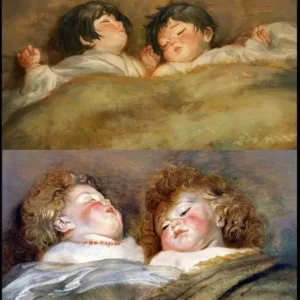
A painting showing two children: for Reubens, his nephew and niece, the children of his beloved brother Philip, and for Jujutsu Kaisen, of the innocence and love between twins Mai and Maki from birth, an innocence stolen by the cruel Jujutsu world.
4. “Dead Mother” Egon Schiele (1910)
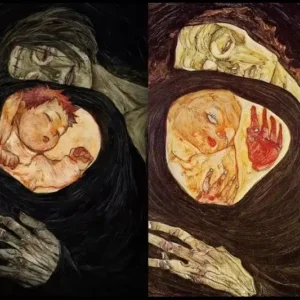
The original painting depicts an emaciated mother near the point of death holding her child, combining a lost relationship with one’s mother but also a forced one.
The child in the original painting has a detached hand and looks as dead as the mother, who is essentially forcing the maternal bond and yet the decay and death experienced by the mother is an expression of that motherhood as she will do anything to be with her child.
And the child himself is trapped in that embrace, with the cloak and her form seemingly like the womb.
A Cursed Womb, if you will.
And that is what Kenjaku views Yuji as, the most successful and ironically most beloved Cursed Womb he ever made and that is why there is a tenderness to the grim scene.
This painting has layers of references.
First, this further ties Yuji to his Death Painting lineage because this itself is a painting of death.
In fact, this is not even the only “Dead Mother” painting
There are at least five paintings around the “Dead Mother” theme, with this one being “Dead Mother I” (1910), which is not even the first Dead Mother painting
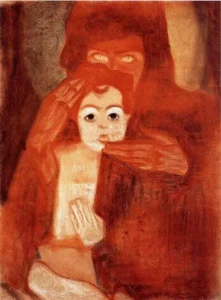
The first part of this series is the “Madonna and Child” (1908), which is an inversion of the usual dynamic between the Madonna (Mary, Mother of God) and the child (Jesus Christ) as the frightening, darkened woman holds the child, who looks healthy sits on her hand, with both hands on his head, as if representing that forced bond
“Dead Mother II” (1911), also titled “Birth of Genius” references Schiele’s own birth but this man, it shows the mother is resting, almost dead, and now the child seeks an escape from her womb-like embrace.
The previous painting showed a child sleeping but now this one has the child being aware of how trapped they are.
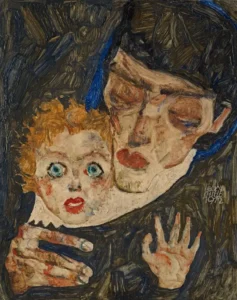
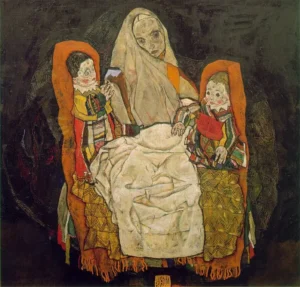
The other paintings include “Mother and Child” (1912) and “Mother with Two Children” (1915), with a sixth, “Family” (1918) showing a distant set of three family members and even without being used, it relates to Jujutsu Kaisen due to how Choso and Yuji do not at first see themselves tied to the blood bond as brothers from the same parent (Kenjaku).
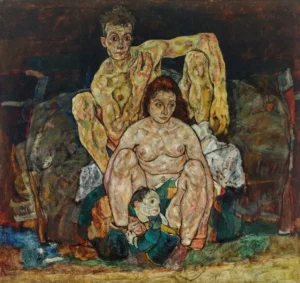
Not only is this a reference to the Death Paintings being a set of nine aborted half-Cursed Spirits infants turned Cursed Objects but also a reference to Kenjaku’s many possessed bodies.
Second is how Kenjaku did directly nurture Yuji for a significant part of his growth as a toddler, meaning a corpse was acting as a mother.
Third, this is an inversion of Kenjaku’s dynamic with the Death Paintings and another example of a perversion of nature as Kenjaku forced a woman to make love with Cursed Spirits on top of her receiving his blood, the blood of the Kamo Clan and of Kenjaku himself, and that of the Cursed Spirit while also murdering
Kenjaku possesses an already deceased Kaori and uses her reproductive system to birth Yuji Itadori and the painting makes it very clear that Kenjaku was possessing a body that had begun to decay.
While both the anime and manga portray Kenjaku-Kaori as a healthy, living person, the opening reminds us that Yuji was raised by a corpse.
In Berserk, Guts was born from the corpse of his own mother, hanging from a tree, representing a life tied to constant death.
Yuji is not only born a Death Painting from a corpse controlled by an ageless inhuman human but is destined to a life witnessing much death, all the while he is alive.
5. “The Kiss” Gustav Klimt
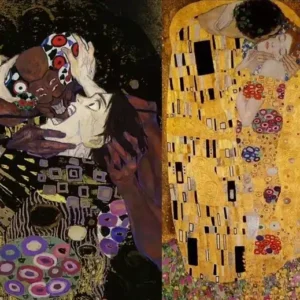
In Klimt’s obra, the kiss represents devotion and unity, the promise Yuta makes to Rika, except he is not kissing Rika here and the distortion is the point.
While fans make fun of Yuta engaging in relations with another Cursed Spirit like his own Shikigami Rika (who was based on his childhood friend that he made into a Cursed Spirit), this actually reflects real manga events.
In the story, when Yuta faces off against Kurourushi, he destroys the Cockroach spirit by blasting it with Positive Energy coming from his mouth.
Yuta is an interesting application of masculinity for the series as he is presented as a gentleman, the most moral of the Sorcerers, even moreso than Megumi, who prioritized sacrifice and efficient takedowns.
Yuta’s masculine gentleness and tenderness as a lover are also a weapon, one that he uses to tame the shikigami Rika and also lull his enemies to a discomfort.
6. “The Scream” Edvard Munch
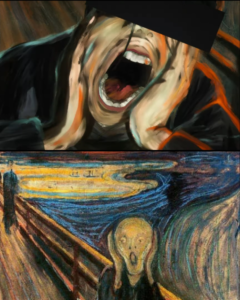
This masterpiece was formed from the crisis-filled mind of Norwegian painter Edvard Much and his existential dread, living under difficult times in Europe at the turn of the 19th century that saw the rise of nihilism, changing political climates and economic instability, all as the world headed itself to modernity.
Essentially, the Scream is a sign of a historical change and the inevitable dread that comes with that change, since modernity was more than a socioeconomic change but an existential one, with individuals being depersonalized from their communities, whether due to war or to rampant industrialization that made humans focus on profit and labor over each other.
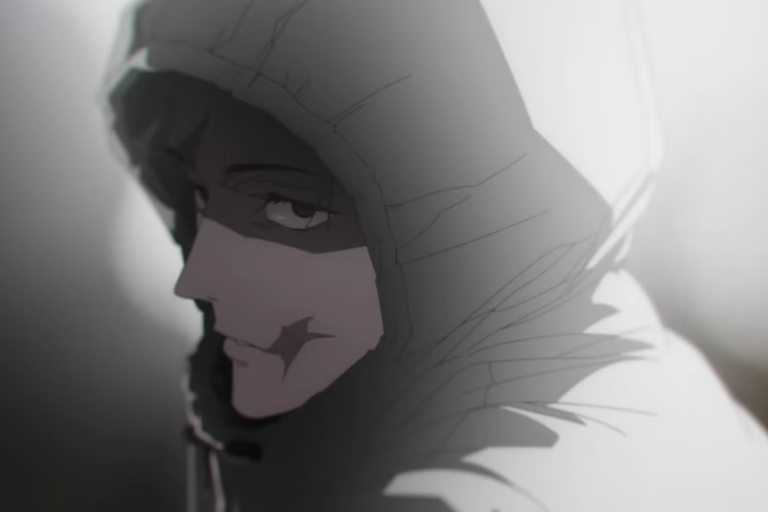
In the opening, we see a person whose eyes are obscured by a black bar, which represents depersonalization or someone refusing to reveal themselves or is refused to be revealed out of fear for their safety.
While many fans are still unsure who it is, the genga from animator and Jujutsu Kaisen Season 2 Episode Director, Ryota Aikei, has shown that it is a woman and she is Maki’s mother.
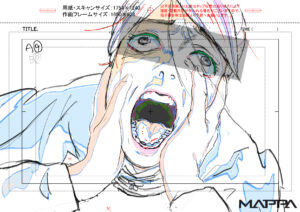
Given the inspirations of the painting, it is likely a reflection of how depersonalized Maki’s mother has become, culminating in her final moments as she kills Naoya, her recent tormentor and who had treated her like a slave as the Zenin men, her husband included, did, all the while she loses her own life from wounds sustained after her daughter had cut her neck.
7. Utagawa Kumiyoshi’s “Wada Heita Tanenaga Killing a Huge Python by a Waterfall” for Yuta and “Miyamoto Musashi Killing a Monster Bat in the Mountains of Tambo Province” for Maki
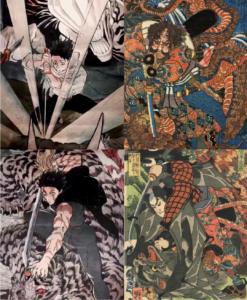
Although “Man Killing Serpent or Dragon” is quite common to see in block prints, and Japanese mythology in general, some fans on Reddit have confirmed that one artist produced the same paintings referenced by these shots from the opening, indicating Maki and Yuta’s connection and mutual growth as lonely, burdened “Strongest”, with Yuta having the most Cursed Energy of his generation and Maki being the new Toji Fushiguro, the God of War with full physical Heavenly Restriction.
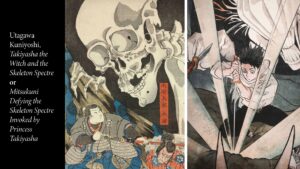
However, Rika’s presence also suggests it is a mixture of the “Man Killing Serpent” motif of his other paintings and another Kuniyoshi motif: “The Skeletal Spectre”
8. “Y-Junctions” series by Tadanori Yokoo (2009)
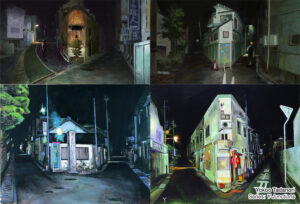
After we see a shot of Maki and Mai on the streets together, we immediately get these two paintings referencing Yokoo’s Y-Junctions, the forks in the road around a city, specifically Tokyo.
The original photographs and paintings of Tokyo’s Y-Junctions are positioned as empty streets in otherwise heavily populated spaces, which ties to the Culling Game colonies emptying the streets so that only the Players are inside but at the same time also references the endgame for the Merger, where millions will be sacrificed for Kenjaku’s plan.
We see Scorpion-Hair Girl, Remi, turning left towards a flickering street light.
While Rin Amai is turning right, leading the way for Yuji.
Note that in the story, both are leading the characters in broad daylight but the paintings in the opening are at nighttime, again points in time that the original painter Yokoo, found opportunities to draw the street settings without any human presence.
Amai is the correct answer because on his version of the painting, we see a pre-schooler’s drawing of a sunflower underneath a rainbow.
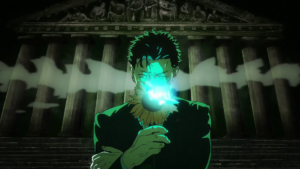
The sunflower is the symbol for lawyers in Japan and therefore is where Higuruma is.
The anime episode emphasizes the dis/honesty of each character through Remi hiding behind the poll while Amai is fully exposed, under the shade of the tree.
Which is ironic since Remi’s side has a tree image, which does tie back to her intent, leading Megumi to a trap made by her boss, Reggie Star, who looks like a tree due to his receipts cloak.
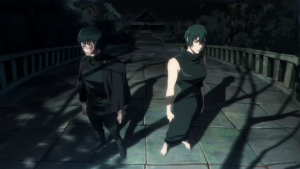
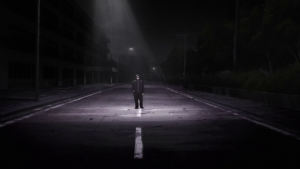
Relevant to the timing of this painting’s placement is that at the first 20 seconds of the opening, we see Yaga on the road alone like Maki and Mai were, representing the same theme of liminality, the crossroads of choice as a Jujutsu Sorcerer: to sacrifice oneself so another can live.
This fits the motif of the moth (Yaga’s name) entering the light, as established in Episode 5: “Fever”.
9. “Mutter mit Kind auf dem Arm” (Woman with Dead Child) by Käthe Kollwitz (1916)
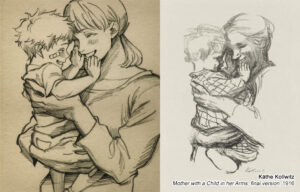
In contrast to the horrific imagery of Schiele’s “Dead Mother” is the loving, innocent longing behind Kollwitz’s “Mother with Dead Child”.
This is an image of Atsuya Kusakabe’s sister with her deceased son as a child, who would live on via Yaga’s Corpse Doll and that joy is captured through a fast sketch.
The original painting was tied to the context of Berlin’s unstable economy, World War I, and the social injustice faced by the commons.
Grief, desperation, futility in a single embrace as a mother clutches to a loss that she knows and feels should not have happened.
This is why the voice delivery from Kusakabe’s sister is so heartbreaking, as it reminds the audience no mother deserves to lose a child so early.
And what Yaga did was not as cruel as some might think it is.
If anything, it is an opportunity for healing, maybe for a time, because death and the life moving forward could not have given her that space.
10. “The Three Judges” by Honoré-Victorin Daumier
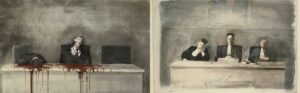
The image is taken from Higuruma’s flashback from Chapter 159 and ties into how he started his career as a Sorcerer in the Culling Game
What is interesting is that Higuruma kills two of the figures, as there is no third judge.
He is the defense attorney and the two killed by Higuruma are the prosecutor and judge.
The order is as follows
12. “Ophelia” John Everett Millais
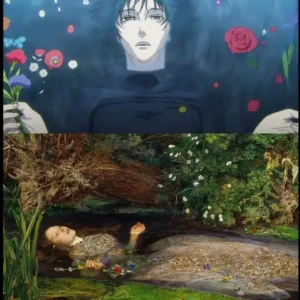
The final classical art reference happens at the last 7 seconds of the opening, at 1 minute, 23 seconds in which after the Zenin lineups (Kukuru and Hei Units), we see the helicopter and plane pair flying with the red moon behind, Haba and Hanyu respectively, followed by Kusakabe and his sister, and eventually Maki bathed in blood.
After we see Maki with Split-Soul Katana bathed in blood from cutting down the Kukuru Unit, we cut to the Ophelia painting, which symbolizes female purity and innocence corrupted by a patriarchal society, madness, female tragedy, and the fragile boundary between life and death.
With a different angle from the original painting, we see Mai striking the same pose as the woman.
Mai is a victim of Zenin sexism, where her weaker Cursed Energy has reduced her to a slave and as implied by Naoya, a victim of sexual abuse.
Film, Anime and Other References
- Ghost in the Shell: Stand Alone Complex
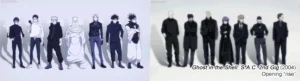
This is a reference to the series, Ghost in the Shell: Stand Alone Complex (2004), Opening 1 “Rise”, with a closeup to Tengen timed like the closeup to Major Motoko Kusanagi
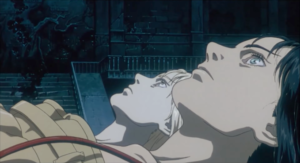
Tengen takes the place of Major Kusanagi and it is quite on purpose by Gosso because the voice of Tengen, Yoshiko Sakakibara, is the voice of the Puppet Master, the main villain of the original Ghost in the Shell film and the being the Major fuses with by the end of the story, a similar concept to the Merger.
2. Pink Floyd’s “The Dark Side of the Moon” Album Cover
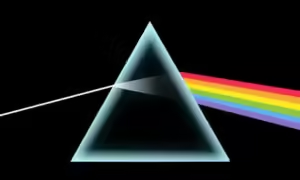
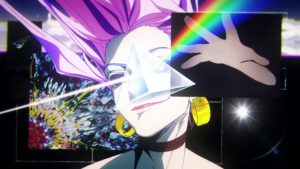
The Sendai Socrerers are given Pink Floyd-inspired shots, the most direct being Takako Uro due to the presence of the rainbow.
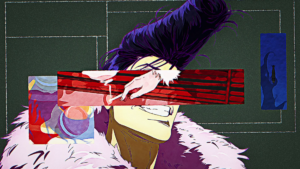
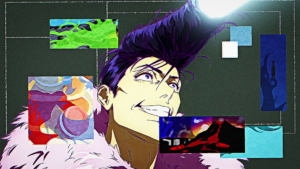
With Ryu Ishigori, we see two sets of frames, the main ones being what appears to be a volcano, tile roofs like that of a castle and cakes, with an addition showing him holding a cigarette.
These indicate his longing for satisfaction and the volcano could also tie to that: having the highest Cursed Energy output in the Culling Game and a technique that makes his pompadour hair resemble a cannon and top of a volcano.
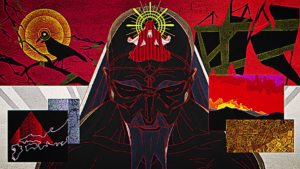
Dhruv has his usual meditative pose, a satellite shot of the entire city and a raven observing them, likely representing his pterodactyl Shikigami.
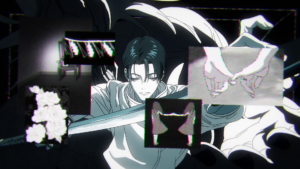
Yuta Okkotsu has the most detail since all of his are tied to his bond with Rika
3. Fight Club
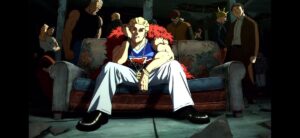
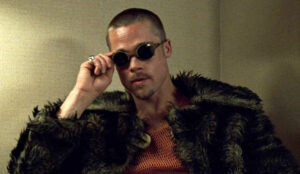
This is already pretty obvious even from the main story but Hakari, his design and his philosophy of fever is a reference to Tyler Durden, the main villain of Fight Club.
4. Center Man
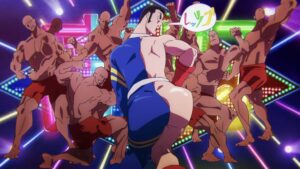
In-between the Zenin Clan lineups, we get a shot of Takaba flexing his rear, inspired by the very person behind Takaba’s outfit and comedy style, The Center Man played by comedian Taizo Harada from the 1999 TV show “SILLY GO LUCKY!”
He is also featured in-between the chorus, exercising with Yuji and Megumi.
5. Medabots (1999) – Opening “Wisdom and Courage! Medarot
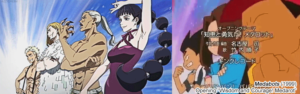
After the Sendai crew, the Reggie Star crew lineup is inspired by Medabots
6. Danzen! Futari Wa Precure Opening (2004)
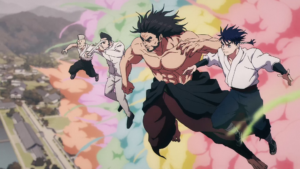
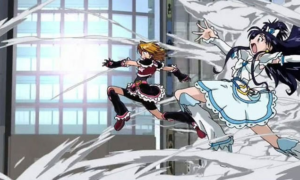
It is quite fitting for the sexist Zenin Clan to get a reference from a rather girly anime, one involving the empowerment of magical girls.
7. Metro Goldwyn Meyer Intro
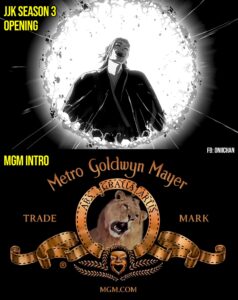
At the end of the opening, we see the bomb drop again, leading to a reaction from the Takaba emote with the cellphone, then cut to Yuji looking at his bloody hands and a visual of cogs representing his cog philosophy, before the bomb explodes and shows us Kenjaku laughing, the thing he expects from the final Merger.
Staff:
SB: Shouta Goshozono
UD: Shouta Goshozono, Takeru Satou
AD: Souta Yamazaki, Yousuke Yajima, Hiromi Niwa
Ass. AD: Reimi Eda
KA: Ryouta Aikei, Kaito Tomioka, Yuuta Kiso, Keiichirou Watanabe, Kouki Fujimoto, Eri Taguchi, Xuanjing Wang, Yuuto Kajino, Souta Shigetsugu, Yun, Souta Matsunaga, 斎王我馬 (?), Teppei Okuda, Moaang, Shin Kaneko, Yooto, Yurie Muta, Odashi, Naoki Miyajima, Yakumo Crack, Yurika Nakanishi, Su-Min Oh, Hiroko Utsumi, Takuya Miyahara, Hayato Kurosaki, liku, Yuuichirou Iida, Tadashi Hiramatsu, Duong, Julian Bentley, Shinsaku Kouzuma, Hiromi Niwa, Souta Yamazaki
A-1 Pictures
Rina Miura
Shouta Goshozono
CLICK HERE TO JOIN THE ANIME EXPLAINED WHATSAPP GROUP CHAT NOW!