
The Perfect Ending? Chainsaw Man FINAL Chapter 232 Spoilers!
This is quite possibly the single best timeline in Tatsuki Fujimoto’s works. Reaching the “what-ifs” Fujimoto yearned for Denji, we finally get a world where the story and the fans can say “Thank you, Chainsaw Man!” But is this really the right call?
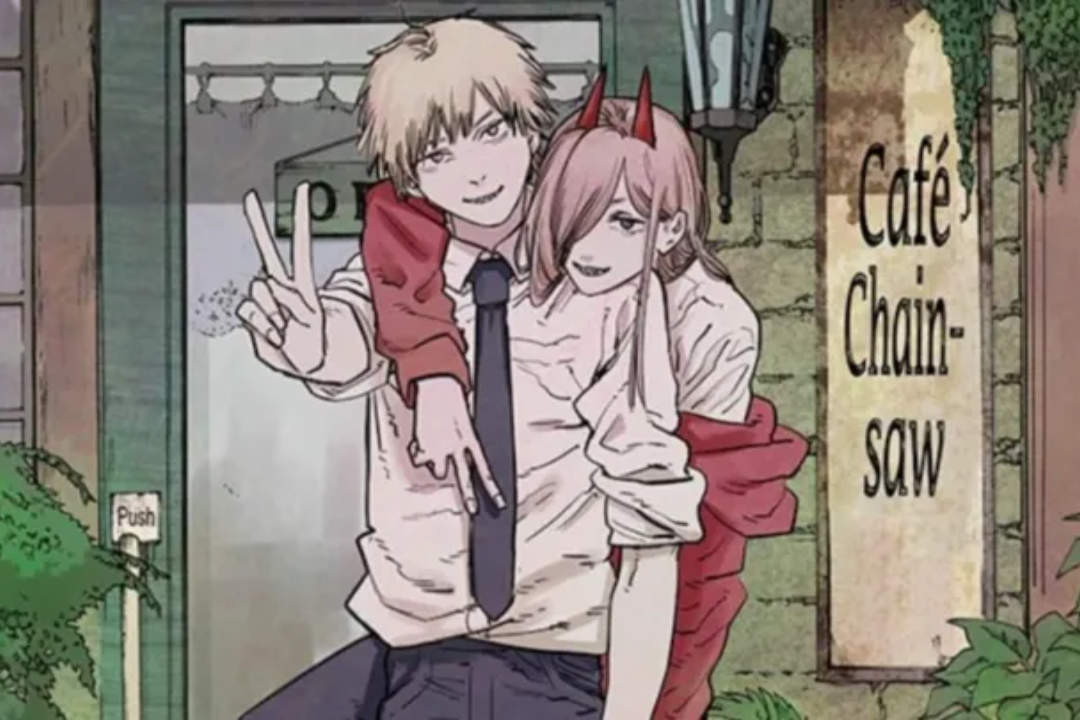
In the penultimate Chainsaw Man chapter, Pochita eats himself to reverse the misery Denji experienced.
This is officially the end of the entire Chainsaw Man franchise.
Chainsaw Man Chapter 232 is titled, “Thank You, Chainsaw Man!”
This chapter has 30 pages.
This brings the final Volume 24 to a total of 165 pages of manga content, not including all the extra pages to come.
Time Turns Back
As predicted, some form of time RESET takes place.
However, it is not strictly that Denji turned back to 16 years old.
He looks 18 but he still has his eyepatch and coughs blood due to selling his organs.
Regardless of what year this is, whether it is 1997 ot 1999, the circumstances are pretty much the same as before.
The Zombie Devil betrays Denji because the latter is a Devil Hunter.
But rather than Pochita, he is saved by Power, a “naked woman”, a wild Fiend who only wanted to drink the blood from the zombies..
Viewing Denji as a mere dog, Power forms a contract, giving Denji the blood needed to survive.
The Blood Devil seems able to at least regenerate a destroyed heart.
Or does the combination of Power’s blood awaken something that we will see later.
This is a “reverse fulfillment” of Power’s contract from Chapter 91: “Power, Power, Power”.
For years, fans have waited for the day that Denji would reunite with Power in some form, even as a different, reincarnated Blood Devil.
And in a weird, almost frustrating way, we got just that.
The thing is, this plotline was always important to the readers.
We all want Denji and Power to reunite, so fans were expecting Denji himself to at least commit to a search for the Blood Devil.
Maybe even mention that in his time in Hell in the Falling and War Devil Arcs.
Yet not only is there no reference at all to the contract in all of Part 2.
So this is Fujimoto’s assertion that he remembered that detail that fans wanted an actual effort resolved, which becomes a running theme with the writing behind the ending, or more specifically, the process to getting there.
Nayuta is Makima
Just like the main timeline, Denji is found by the Control Devil.
Except this is Nayuta.
So it looks like Makima does not exist at all.
This could be due to how the Makima personality is so specifically tied to Pochita, on top of how Denji’s solution to prevent the erasure of the Control Devil or Makima’s regeneration is by eating her body after killing her with anything but Pochita’s Erasure power.
It is clear there are key differences in this encounter, mainly that unlike in Part 1, here, Power takes charge and, declaring her “godly power”, attacks Nayuta, only to receive the “Bang” from her.
We see Power take Aki’s place in the dynamic and Nayuta’s dogs liking the two new Devil Hunters.
Nayuta is a more bratty version of Makima, who is more professional and gives specific instructions.
Instead, she plays video games and acts like a typical jerk boss.
I Want
Throughout the chapter, Denji expresses his desires, feeling his life is constantly empty.
He wants to play video games with a girl but he only sees that girl (Nayuta) drive him away from the chance to have those games with her.
He wants to have a pet dog but he is the pet dog and surrounded by fellow dogs, driving him further into alienation.
Like in the original timeline, Denji liked sleeping because he gets to dream good dreams there.
However, this version of Denji is more depressed or frustrated.
Whether due to retaining an inkling of his memories from his previous life or his maturing brain realizing he was lacking in so much, it is clear this Denji lacked the spark of joy he gained upon becoming Chainsaw Man.
This seems to be a familiar pattern, as once Denji became Chainsaw Man, even before becoming a popular hero of the masses, his heart was “different”.
Denji was merely walking to pay off a debt in this world, a debt that, like life itself, was not something he asked for, much less spend his time to pay up.
Why would this version of Denji be the one that is happiest?
We will see that soon.
Chainsaws In a Chainsawless World?
Power notes that Meowy, her cat, prefers Nayuta over her, which makes Power theorize that Nayuta is the Control Devil.
In the original timeline, Power was always wary of Makima, so perhaps she did think of that but never voiced it out.
Here, it is spelling out who Nayuta is in the current timeline, as well as how totally different this dynamic is.
We do not even see Aki at all and Aki has been a crucial familial figure to Denji and Power yet it is only just the two of them going through this life.
Denji remarks that Power is happy-go-lucky in spite of her frustrations with Nayuta.
Denji brings up needing a weapon to face the Devil in front of him but since he already used an axe, he thought about using a chainsaw from her blood instead.
Which is strange since Pochita, the Chainsaw Devil, was erased.
And yet this was not strange for Power at all, even if she clearly would never have any memories of Pochita given how she died much earlier and has less of a connection to that than Denji has to Pochita.
After Denji tells everyone to evacuate so Power can have noms to herself, we see a surprising sight, of Asa hanging out with Bucky the Chicken Devil and she is about to flatten him just like at the start of Part 2.
But then a helping hand came.
A Happy World for Asa and Denji
Asa avoided her terrible fate, of losing her place among people because of guilt and self-loathing, and it is thanks to Denji’s positive yet ordinary presence as a mere bystander helping a fellow human out.
The first chapter of Part 2, Asa killed Bucky the Chicken by accident, sealing her in her guilt arc and led her to becoming the fiend of the War Devil Yoru.
Here, this world offers Asa a proper chance at life.
For all her life, Asa was constantly put down by the world around, unable to find a place anywhere.
She was kept silent by her mother’s actions, including her choice to save money by killing Asa’s father.
She became an orphan and everything that mattered to her, from the cat to her chance at making friends at every single turn, would be stripped from her by force because of this cruel world of Devils.
Or rather, a world of cruel humans, who only see this orphan as a nuisance, not someone who needed help.
By simply helping someone out, Denji became a real Hero, the Hero Pochita wanted to be, not the Hero Makima insisted on.
This might be the strongest positive for the ending, in spite of some foundational issues.
And Asa thanks the man she only knows…
As Chainsaw Man.
All because of the chainsaw he uses.
Wait, so Pochita is not the Chainsaw Devil after all?
Or is there something missing here?
Pochita’s Return
The minute Asa thanks Denji, we see a visual of the sleeping Pochita heart thumping.
This feels like a callback to Chapter 209: “Terrifying Weapon” when nuclear weapons returned because humanity rediscovered the materials to make them.
This will not be the same Pochita obviously.
No Devil erasure, no anchor point.
But this does fulfill Pochita’s yearning and give him the ending he deserved.
By sacrificing himself for his friend, Pochita gained salvation.
A reincarnation where he is the Chainsaw Man of yore.
A Devil based on a weapon, a tool, designed to help bring out children into the world.
And what a better fit than to be Denji’s heart, akin to an umbilical cord.
And Chainsaws are a motif for breaking out of the motherhood link.
After all, the first Weekly Shonen Jump cover for Chainsaw Man has a shocked Makima on the blade’s reflection, which was redone for Chapter 96: “This Kind of Taste”
Makima is treated as the mother figure and Denji is tied to her like how she ties her pawns via umbilical cords.
But notice how Pochita’s form has the intestinal scarf strangling the neck?
This is Pochita’s depression manifested.
In Part 2, it is Pochita becoming that motherly obstacle to be separated from, leading to the birth of a new life.
A new Denji and even a new Pochita.
This is the purest form of Chainsaw Man.
Asa, as the reader, thanks Denji, as Tatsuki Fujimoto, for the simple act of kindness.
Back to Power
Denji brings up how he feels a weird thumping sensation in the heart and Power tries to act like an expert because of her characteristic pride.
The chapter ends with Power catching up with Denji and both of them wanting to go out for snacks, as they are still struggling to get by together.
This is the happiness Pochita was referring to.
By just living normally, getting by and meeting people he can see just as much as he is being seen, he is living the peaceful life he needed in order to be himself.
The Perfect Ending?
What is amazing about this ending is that you can always imagine every “What-if” Fujimoto wrote for Denji and Reze and it can happen.
Reze is not here, which is one loose end Fujimoto has no plans on resolving due to the nature of Reze’s role in the movie.
However, Denji, Nayuta, Power and Asa are all happy and it seems this imperfect but ordinary world, where Denji and Power are still struggling but happy to be together is the best outcome possible.
Wait a Minute…
And this is where we need to calm down and assess what exactly Fujimoto just did.
The ending of Chainsaw Man itself, in concept and on paper, sounds incredible!
After 232 chapters of immortality destroying the meaning of life, of suffering without end, of addiction spiraling beyond hope, Denji can finally be happy in a world where he is normal.
And we even get the possibility of a more dormant Chainsaw Heart, where Pochita is weak, uninvolved in the plot, no longer the anchor of the multiverse and can experience the warm fuzzies of love.
One problem: no one earned this.
Not Denji, who was the very source of this change and needed it so badly.
Not Fujimoto, who wrote this story for the sake of extracting catharsis from this audience.
But most of all, not us, the audience who spent all of Part 2 wondering what the Apocalypse was even all about.
The main issue comes from the core conclusion and main point of this ending: making Denji happy and bringing Power back.
These are the two most important things to the reader.
But aside from a missing Aki, whose life tragedies would still prevent him from entering the picture, we got those two things together in this setup.
But the problem is that we are not “rewarded” by this journey here.
Instead, this feels like an answer to a question Fujimoto avoided for the past 4 years.
See, the issue with this amazing ending is that there has never been a journey to bring us to Power.
Power may be a memory that flashes when Denji sees Yoru or Asa but she is not made important to this story.
It is not about adding more Power or memories of her.
The issue is that in all this time, no effort has been made to even search for her, as per the stipulations of Denji’s contract with Power.
Contracts are supposed to be fulfilled, so why does Denji actively refuse any chance to do so.
Is it because of his lack of intelligence and resources?
Sure that could be the case.
After all, he is not quite affiliated with Public Safety anymore.
Kishibe is somehow still absent even though he states that he is busy.
But then wouldn’t someone with a missing loved one move Heaven and Earth beyond their means?
Maybe the whole point was Denji’s addiction arc?
Yet there is no attempt to bridge the two problems: Denji’s obsession with being Chainsaw Man and Denji’s longing for Power.
Denji always wanted family and his addiction gets in the way.
Yet nothing connects back to Power.
This feels like a hard reset in an attempt to avoid bringing up how we never even went to that journey.
Asa Who?
Something fans will bring up is how Asa Mitaka, the supposed new lead character of Part 2: The Academy Saga, is not treated as “important” for this ending, in spite of how the ending heals Asa’s guilt-ridden soul.
Over time, the story of Asa became a setting for Denji’s own.
If thought of as the continuation to Denji’s growth, Part 2 would be fine but it was previously set up with Asa’s importance being kept in mind at all times.
Granted yes, she is still treated as a fellow protagonist.
However, with Part 2’s paper-thin side cast in stark contrast to Part 1’s fat worldbuilding, Asa and Denji feel so isolated we see the flaws of their dynamic together, mainly that Fujimoto is more able to “act out” as Denji and keep Asa’s agency to the sidelines.
She was just along for the ride and it is especially jarring because after the flashback in Chapter 217: “Two Good People”, Asa was mostly sidelined.
The final resolution was mostly introspection and Asa’s characteristics, her slow growth, leading to Yoru’s defeat.
But this was still not enough of a way to bring Asa’s importance to the forefront.
Even if the conversations with Yoru helped resolve Asa’s sense of guilt as being a normal part of humanity, of being a “good person”, it feels strange that we left the story with Yoru, Asa’s former tormentor, simply speaking for Asa.
It is frankly insulting that Asa’s final word comes from a completely different person using her body, almost symbolic of Asa’s feminine agency being stripped from her by the powers that control this story.
Again, the isolation Denji and Asa feels ultimately make each of their respective arcs frustrating.
Because of this isolation, Asa has no one else to connect to in order to process her sense of humanity.
Because of this isolation, Denji is too much the focus and his flaws are irredeemable, rather than a part of a possibly well-intended story arc about overcoming the addiction common to all people in modern life: overstimulation and comfort zones.
Fujimoto Said It Best
Yes, in the last chapter, Pochita said that Denji was happiest when he was poor and struggling, because in all those times, he was not overfed with addiction and stimulation.
Denji lived in a comfort zone.
And so did Tatsuki Fujimoto.
And it seems the Reze movie reinforced that mindset.
While Fujimoto is constantly self-aware of his sentiments and the stories he writes, like Denji, he seems to be preoccupied with the dopamine rushes he gains in life.
Part 1 is where his tight mastery of writing, minimalist dialogue style and impeccable panelling and art shine.
No character was wasted.
The world felt alive and lived in.
We were occupying the same space as Denji and the cast.
Part 2 started out with that energy, with a more mature Denji taking on the world but in the story of a guilt-ridden girl whose life changed the same way as Denji, due to a weakened Devil, except one who would grow to gain genuine feelings of friendship.
Friendship goes beyond the culture of the Devils after all, as they are a race made and dominated by Fear and relations are formed mainly through Contracts with humans.
However, as time went on, Fujimoto simply became too comfortable, enjoying each encounter Denji (as the Fujimoto self-insert) had and the story kept going around in circles to the point that it no longer became a new tale starring Asa Mitaka.
Because Fujimoto got too comfortable and overstimulated, his art and writing got sloppy.
As amazing as this ending is on paper, its execution brings everything down.
By not bringing the readers to the whole process of earning this beautiful ending, we are left with a sequel of Chainsaw Man that has wasted our investment in favor of satisfying an author’s unearned fantasy, a fantasy that buries the problems of its writing foundations with catharsis and gratitude for a story we spent nearly a decade on enjoying.
CLICK HERE TO JOIN THE ANIME EXPLAINED WHATSAPP GROUP CHAT NOW!